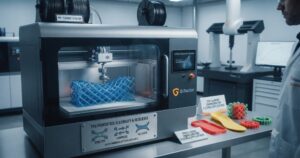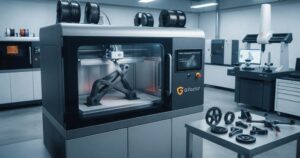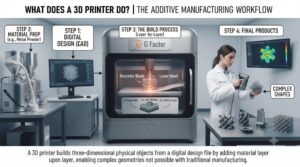
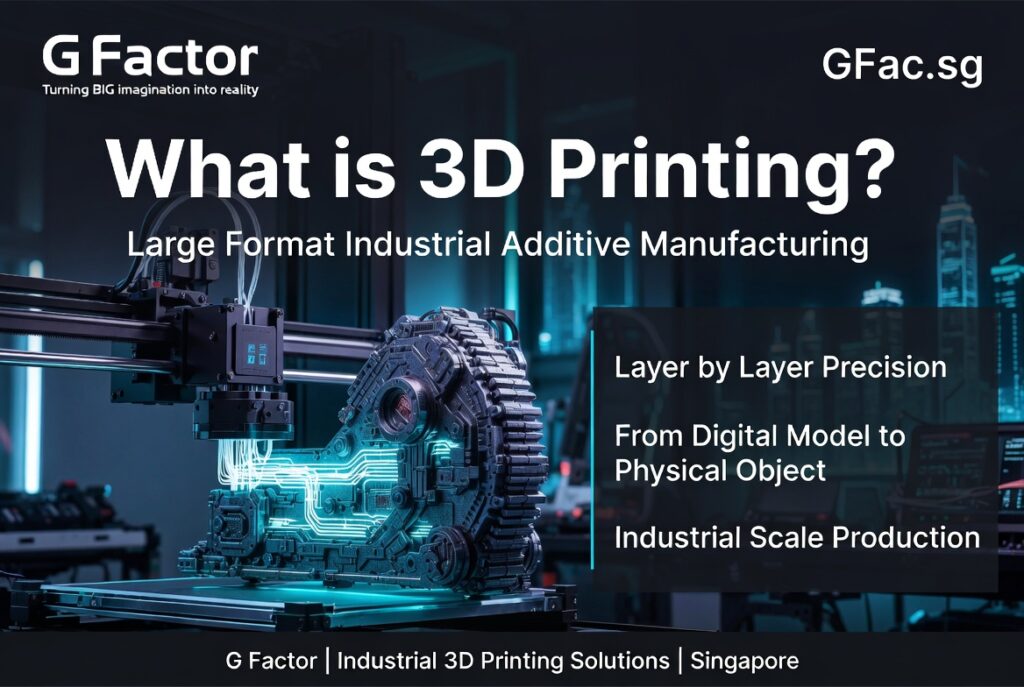
3D printing is one of the most transformative manufacturing technologies in the modern world. If you are wondering what is 3D printing explained in simple terms, it is a process where physical objects are created layer by layer from a digital design file.
Instead of cutting or carving material like traditional manufacturing, 3D printing builds objects gradually using plastics, industrial pellets, resins, or composite materials. This method is called additive manufacturing, and it is now widely used in automotive, aerospace, architecture, medical, marine, and industrial production.
At GFac Industrial 3D Printing Solutions, advanced large-format FFF and FGF systems are used to manufacture prototypes, molds, tooling, and full-scale production parts with higher efficiency and lower cost.
In this article, you will understand:
- What 3D printing is in simple language
- How the process works step by step
- Types of 3D printing technologies
- Materials used in industrial printing
- Real-world applications and examples
- Advantages and limitations of the technology
What Is 3D Printing?
3D printing, also known as additive manufacturing, is a process of creating a three-dimensional object from a digital model by adding material layer by layer.
Unlike traditional methods such as:
- CNC machining
- Injection molding
- Casting
- Drilling and cutting
3D printing does not remove material. Instead, it builds the object from the ground up.
Simple Example
Think of building something using ultra-thin layers stacked one above another until the final object is formed.
Why 3D Printing Matters Today
3D printing is no longer just for prototypes. It is now used for real industrial production.
Key benefits include:
- Faster product development
- Lower manufacturing cost for low-volume production
- Ability to create complex geometries
- Reduced material waste
- Custom manufacturing at scale
According to Wohlers Associates, industrial 3D printing continues to grow rapidly as companies adopt digital manufacturing systems.
Step 1: Creating the 3D Model (CAD Design)
Every 3D printed object starts with a digital design created using CAD software.
Common CAD Tools
- SolidWorks
- Fusion 360
- AutoCAD
- Blender
- Rhino
This stage defines the exact shape, size, and structure of the object.
In industrial applications, engineers often use DfAM (Design for Additive Manufacturing) to optimize designs for printing efficiency and strength.
Step 2: Converting the File Into Printable Format
Once the design is complete, it is exported into a printable file format such as:
- STL
- OBJ
- 3MF
This file contains the geometry of the object and acts as the blueprint for the printer.
Step 3: Slicing the Model Into Layers
The 3D model cannot be printed directly. It must first be converted into thin layers using slicing software.
This process generates G-code, which tells the printer exactly how to move.
Slicing Software Examples
- Cura
- PrusaSlicer
- Simplify3D
- IdeaMaker
The slicer controls:
- Layer height
- Print speed
- Temperature
- Material flow
- Support structures
Step 4: Printer Setup and Preparation
Before printing begins, the machine must be properly prepared:
- Load material
- Heat nozzle
- Level build platform
- Calibrate system
Industrial systems like GFac FFF Industrial Printers include:
- Servo motor control
- Auto leveling systems
- High-temperature nozzles
- Filament detection
These features ensure stable industrial production.
Step 5: Material Melting and Extrusion
Once printing starts, the material is heated and pushed through a nozzle.
The printer follows the G-code instructions and deposits material layer by layer.
FFF Printing Process
FFF (Fused Filament Fabrication) uses plastic filament.
Materials include:
- PLA
- ABS
- PETG
- PLA-CF
Learn more:
FFF Filament Materials
FFF is widely used for:
- Prototypes
- Functional parts
- Product development
FGF Printing Process
FGF (Fused Granular Fabrication) uses plastic pellets instead of filament.
Industrial systems like GFac FGF Technology use screw extrusion systems to melt pellets.
Benefits include:
- Lower material cost
- Faster production
- Large-scale manufacturing capability
FGF is commonly used for:
- Automotive tooling
- Architecture models
- Marine components
- Industrial molds
Step 6: Layer-by-Layer Construction
The object is built gradually:
- Layer 1 is printed
- Layer 2 bonds on top
- Process continues until complete
Each layer must bond correctly to ensure strength and durability.
Step 7: Cooling and Solidification
After deposition:
- Material cools
- Layers harden
- Structure becomes stable
Cooling must be controlled to avoid:
- Warping
- Cracking
- Layer separation
Step 8: Post-Processing
After printing, additional finishing may be required:
Common methods:
- Sanding
- Painting
- CNC machining
- Heat treatment
- Polishing
These improve appearance, strength, and precision.
Materials Used in 3D Printing
Filament Materials (FFF)
- PLA
- ABS
- PETG
- PLA-CF
Explore:
FFF Materials
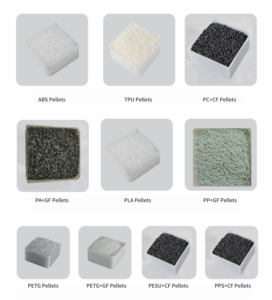
Pellet Materials (FGF)
- ABS
- TPU
- PA+GF
- PC+CF
- PPS+CF
Explore:
FGF Materials
Real-World Applications of 3D Printing
Automotive Industry
- Prototypes
- Tooling
- Custom parts
Aerospace Industry
- Lightweight components
- Structural testing
Architecture
- Building models
- Design visualization
Marine Industry
- Hull prototypes
- Large molds
Sculpture & Design
- Large installations
- Exhibition pieces
Advantages of 3D Printing
- Faster production cycles
- Reduced material waste
- Complex design freedom
- Lower tooling costs
- Custom manufacturing
Limitations of 3D Printing
- Surface finishing required in some cases
- Slower than mass injection molding
- Material limitations
Future of 3D Printing
The future of additive manufacturing is moving toward:
- AI-powered optimization
- Smart factories
- Hybrid CNC + 3D printing systems
- Sustainable materials
- Fully automated production
Organizations like ASTM International help standardize global additive manufacturing processes.
FAQs
What is 3D printing in simple words?
It is a process that creates objects layer by layer using a digital design.
How does 3D printing work step by step?
It works by designing a model, slicing it into layers, and printing it layer by layer using heated material.
What materials are used?
PLA, ABS, PETG, TPU, and industrial pellets are commonly used.
What industries use 3D printing?
Automotive, aerospace, architecture, medical, marine, and manufacturing industries.
Final Summary
3D printing is a modern manufacturing method that builds objects layer by layer from digital designs. It is widely used across industries because it reduces waste, improves flexibility, and enables complex designs that traditional manufacturing cannot easily produce.
With technologies like FFF and FGF, companies can now move from prototyping to full-scale industrial production efficiently.