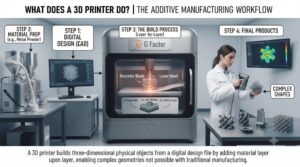
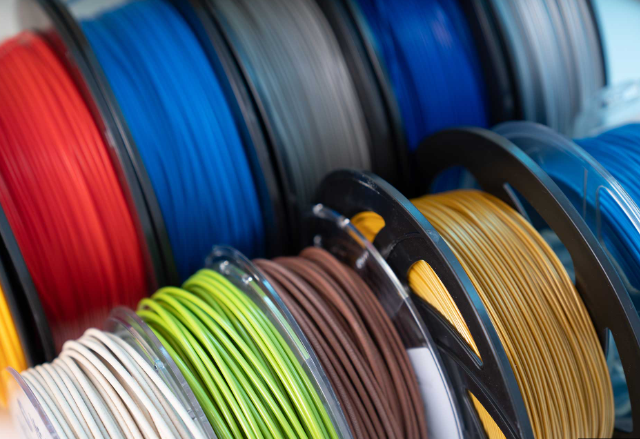
3D printing has completely transformed rapid prototyping, product design, and custom manufacturing. However, even the most advanced 3D printer relies on one critical factor: the 3D printer filament fed into its extruder.
Choosing the right material determines whether your print turns out to be a brittle decorative model, a flexible elastomeric seal, or an impact-resistant industrial component. With dozens of polymer blends, composites, and specialty spools available today, selecting the ideal material requires a clear understanding of thermal properties, mechanical strength, and printability.
This comprehensive guide breaks down popular filament types, technical properties, and best practices to help you select the perfect material for every print job.
Understanding FFF/FDM Filament Extrusion
Most desktop and industrial desktop printers use Fused Filament Fabrication (FFF)—also known as Fused Deposition Modeling (FDM).
In FFF printing, continuous plastic strands (typically 1.75 mm or 2.85 mm in diameter) are drawn off a spool by a geared extruder, heated past their glass transition temperature inside a hotend, and deposited layer-by-layer onto a build platform to form a 3D object.
To ensure your prints succeed without bed adhesion failures, warping, or nozzle clogs, you need to match your project requirements with the right material chemistry. Explore the full spectrum of available 3D printing materials to find options tailored to your hardware setup.
Standard & Beginner-Friendly Filaments
For makers, hobbyists, and rapid visual prototyping, standard thermoplastics offer an unbeatable balance of ease of use, low cost, and reliable surface finish.
1. PLA (Polylactic Acid)
PLA is the most popular 3D printing filament in the world. Derived from renewable resources like cornstarch or sugarcane, PLA prints at relatively low temperatures without requiring an enclosed build chamber.
-
Print Temperature: 190°C – 220°C
-
Bed Temperature: 40°C – 60°C (Optional)
-
Key Strengths: Minimal warping, easy to print, rigid, low odor, available in hundreds of colors.
-
Limitations: Low heat resistance (deforms above 55°C), brittle under heavy impacts.
-
Best Uses: Visual prototypes, architectural scale models, tabletop miniatures, display pieces.
2. PETG (Polyethylene Terephthalate Glycol)
PETG bridges the gap between easy-to-print PLA and high-strength industrial materials. It offers exceptional layer adhesion, impact resistance, and water resistance, making it an ideal all-around engineering polymer.
-
Print Temperature: 230°C – 250°C
-
Bed Temperature: 70°C – 80°C
-
Key Strengths: Highly durable, chemically resistant, hydrophobic, low shrinkage.
-
Limitations: Prone to stringing, requires clean nozzles to avoid bed damage.
-
Best Uses: Functional enclosures, mechanical brackets, water-tight containers, outdoor gear.
If you are running dedicated desktop systems, sourcing high-grade FFF filament materials guarantees consistent diameter tolerances, preventing under-extrusion and heat creep jams.
Engineering-Grade & High-Performance Filaments
When prints need to withstand mechanical stress, high temperatures, outdoor UV exposure, or aggressive chemicals, standard materials fall short. This is where technical engineering thermoplastics take over.
1. ABS (Acrylonitrile Butadiene Styrene) & ASA (Acrylonitrile Styrene Acrylate)
ABS has long been a staple in industrial manufacturing (used to make LEGO bricks and automotive trims). It offers excellent impact resistance and can be easily sanded or solvent-welded using acetone. ASA provides identical mechanical properties but adds superior UV resistance for outdoor environments.
-
Print Temperature: 240°C – 260°C
-
Bed Temperature: 90°C – 110°C (Enclosed chamber required)
-
Key Strengths: High heat resistance (up to 95°C), high toughness, post-process friendly.
-
Limitations: High thermal contraction (prone to warping/cracking without an enclosed build space), strong fumes during printing.
-
Best Uses: Automotive interior components, protective tool housings, outdoor enclosures (ASA).
2. Nylon (Polyamide / PA)
Nylon is an exceptionally tough engineering material known for its high fatigue resistance, low coefficient of friction, and flexibility under load.
-
Print Temperature: 250°C – 280°C
-
Bed Temperature: 70°C – 90°C
-
Key Strengths: High resistance to wear, flexible yet durable, excellent fatigue resistance.
-
Limitations: Highly hygroscopic (absorbs atmospheric moisture rapidly and must be dried before printing).
-
Best Uses: Functional gears, snap-fit joints, living hinges, custom bushings.
3. Carbon Fiber & Glass Fiber Composites
By blending short carbon fiber strands or glass microfibers into a base polymer (such as Nylon, PETG, or Polycarbonate), composite filaments deliver extreme dimensional stability, high strength-to-weight ratios, and an attractive matte finish.
To learn more about how composite filament and high-volume additive printing systems operate in high-demand settings, read about our complete range of industrial 3D printing solutions.
Flexible & Specialty Filaments
Specialty materials expand the capabilities of 3D printing beyond rigid plastic structures.
1. TPU & TPE (Thermoplastic Polyurethane / Elastomer)
TPU allows desktop printers to produce rubber-like elastomeric parts. Shore hardness values range from semi-rigid (95A) to highly flexible (85A).
-
Print Temperature: 210°C – 230°C
-
Bed Temperature: 40°C – 60°C
-
Key Strengths: High elasticity, excellent shock absorption, chemical and oil resistance.
-
Limitations: Difficult to print on Bowden extruders; requires slow print speeds (15–30 mm/s) and direct-drive setups.
-
Best Uses: Custom gaskets, dampeners, protective phone cases, wearable grips.
2. Soluble Support Filaments (PVA & HIPS)
For complex geometries with internal cavities or steep overhangs, multi-extruder printers use soluble support materials:
-
PVA (Polyvinyl Alcohol): Dissolves completely in warm water; commonly paired with PLA.
-
HIPS (High Impact Polystyrene): Dissolves in D-Limonene solvent; commonly paired with ABS.
Filament Quick Comparison Matrix
| Material | Ease of Print | Tensile Strength | Impact Resistance | Max Temp Resistance | Special Requirements |
| PLA | Very Easy | High | Low | ~55°C | None |
| PETG | Moderate | Moderate-High | High | ~75°C | Heated Bed |
| ABS / ASA | Hard | Moderate | High | ~95°C | Enclosure + Heated Bed |
| Nylon (PA) | Hard | High | Very High | ~100°C–120°C | Filament Dryer + Enclosure |
| TPU | Moderate-Hard | Low (Elastic) | Extreme | ~80°C | Direct Drive Extruder |
| PA-CF | Hard | Extremely High | High | ~150°C+ | Hardened Steel Nozzle |
Pellet Extrusion (FGF): Beyond Spooled Filament
While spooled filament is perfect for desktop models and mid-sized prototypes, printing meter-scale parts (like full automotive bumpers, large furniture, or industrial molds) using standard 1.75 mm filament can be slow and expensive.
This is where pellet-fed additive systems take over. Rather than feeding spooled plastic strand, FGF pellet printing systems utilize direct hopper-fed raw plastic pellets. Pellet extrusion offers up to 20 times higher deposition rates and dramatically lower material costs.
For large-scale factory applications, stocking raw FGF pellet materials provides significant material savings while unlocking high-throughput production capacities.
Whether your workflow calls for precision spool systems or high-volume pellet extruders, selecting the right machine architecture is critical. Compare modern hardware setups by checking out available high-precision FFF filament printers for detailed component fabrication.
Best Practices for Filament Storage & Maintenance
-
Keep Material Dry: Polymers like Nylon, PETG, TPU, and ABS are highly hygroscopic. Moisture causes steam bubbles, popping noises, stringing, and weak layer adhesion during printing. Store spools in sealed vacuum bags with desiccant or use active filament dry boxes.
-
Use the Right Nozzle Type: Composite filaments containing carbon fiber or glass fiber act like sandpaper on standard brass nozzles. Always upgrade to a hardened steel, ruby, or tungsten carbide nozzle when printing abrasive materials.
-
Calibrate Extrusion Settings: Run temperature towers and flow rate calibrations for every new material brand or blend to fine-tune layer bond strength and surface finish.
Summary & Next Steps
Selecting the right 3D printer filament comes down to defining your project’s environmental and mechanical requirements:
-
Use PLA for rapid visual models and low-cost prototyping.
-
Choose PETG for general functional parts that need toughness and water resistance.
-
Select ABS/ASA or Nylon for high-temperature, outdoor, or impact-heavy applications.
-
Upgrade to Carbon Fiber Composites for lightweight structural components.
To learn more about our company mission, hardware line-ups, and additive engineering expertise, visit About GFac. Have specific material compatibility questions or need help scaling your production line? Reach out and Contact our team today for expert guidance.