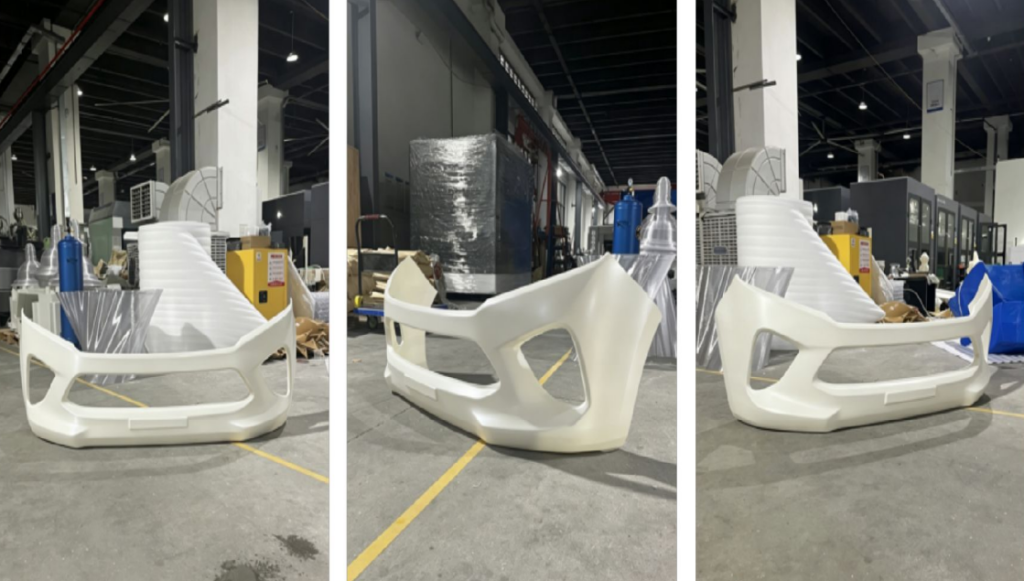
The automotive industry is in the midst of a manufacturing revolution. As vehicle development cycles compress from five years down to under 18 months, traditional supply chains—constrained by lengthy CNC machining timelines, six-figure steel injection tooling, and rigid minimum order quantities—are becoming major bottlenecks.
Whether an automotive enterprise is developing electric vehicle (EV) battery enclosures, iterating complex aerodynamic front fascia, producing thermoforming molds for interior trims, or fabricating low-volume custom aftermarket body kits, additive manufacturing offers an agile, cost-effective alternative.
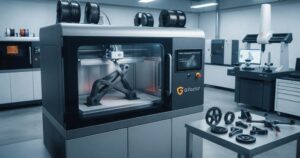
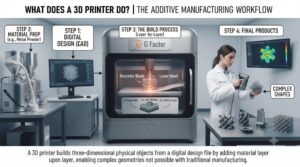
Deploying an industrial 3D printer for car parts allows automotive engineers and tier-1 suppliers to transform CAD models into functional, end-use components within days. From precise high-temperature engineering filament prints to multi-meter pellet-extruded body panels, modern additive technology bridges the gap between rapid design iteration and scalable factory production.
Why Modern Automotive Manufacturing Demands Additive Solutions
Traditional automotive manufacturing relies heavily on subtractive milling and high-pressure molding. While these methods excel at millions-of-units mass production, they are notoriously slow and expensive during prototyping, pre-production validation, and custom low-volume runs.
Automotive Production Lead Time Comparison
-
Bumper Mold Tool: Traditional machining/tooling takes 12 to 16 weeks and costs upwards of $85,000. Additive manufacturing delivers the tool in 4 to 6 days for approximately $12,000.
-
Prototype Dashboard: Traditional assembly requires 6 to 8 weeks across multiple pieces. Additive manufacturing creates a single monolithic dashboard prototype in just 48 hours.
-
Assembly Jigs & Fixtures: Traditional machined aluminum takes 3 to 4 weeks. Composite 3D printing finishes the fixture in 24 hours.
-
Classic Spare Parts: Discontinued or custom-cast parts take months via traditional routes. Additive printing produces functional parts directly from CAD files in 12 hours.
By integrating robust industrial 3D printing solutions, automotive engineering teams unlock four critical advantages:
-
Lead Time Reduction: Shrink tooling and prototype fabrication cycles by 80% to 90%, moving from CAD designs to physical testing within 48 to 72 hours.
-
Material Waste Optimization: Subtractive milling of large aluminum blocks generates massive swarf waste. Additive manufacturing deposits material only where structurally necessary.
-
Weight Reduction & Functional Integration: Complex internal lattice structures and consolidated multi-part assemblies reduce overall vehicle mass, directly improving EV range and driving dynamics.
-
On-Demand Spare Parts Supply: Supply chains can transition from storing thousands of physical legacy components in costly warehouses to maintaining a digital inventory of CAD files ready for immediate printing.
FFF vs. FGF: Choosing the Right Printing Architecture for Automotive Parts
When selecting an industrial 3D printer for car parts, automotive manufacturers rely primarily on two dominant extrusion technologies: Fused Filament Fabrication (FFF) and Fused Granular Fabrication (FGF). Understanding when to deploy each technology is essential for balancing print resolution against production economics.
1. Fused Filament Fabrication (FFF) for High-Precision Components
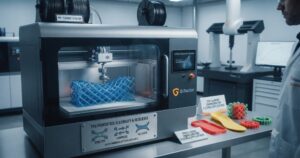
High-precision FFF filament printers utilize spooled polymer strands fed through precision gear assemblies. FFF is the gold standard when printing detailed electronic housings, fluid manifolds, interior buttons, air vents, sensor brackets, and functional engine bay prototypes requiring smooth surface finishes and crisp dimensional tolerances.
Key characteristics of FFF technology include:
-
Spooled filament feed mechanism (1.75 mm or 3.5 mm diameter).
-
Exceptional fine detail capability and tight dimensional tolerances.
-
Ideal for intricate interior ducting, delicate sensor brackets, and under-hood enclosures.
High-temperature FFF platforms (equipped with 450°C nozzles and actively heated chambers) can process advanced engineering materials like Carbon-Fiber PEEK and PESU, producing structural brackets capable of withstanding extreme under-hood thermal environments.
2. Fused Granular Fabrication (FGF) for Meter-Scale Exterior Parts & Tooling
When the task involves printing massive automotive components—such as front/rear bumpers, side skirts, full vehicle floor pans, dashboard frames, or heavy thermoforming tools—filament extrusion becomes too slow and cost-prohibitive.
This is where FGF pellet printing systems excel. By feeding raw thermoplastic pellets directly into a high-torque screw extruder, FGF platforms achieve layer deposition rates up to 20 times faster than standard filament printers.
Key characteristics of FGF technology include:
-
Direct feedstock using raw industrial plastic pellets.
-
High extrusion output rates ranging from 10 to 50 kg/hour.
-
Massive build volumes reaching up to 3m x 2m x 1m.
-
Optimized for full-scale body panels, bumpers, fenders, and autoclave composite tooling.
Moreover, raw pellets cost 60% to 80% less than processed filament, making meter-scale 3D printed automotive parts economically viable.
Comparative Hardware Specifications for Automotive Additive Systems
To highlight how machine specifications map to automotive applications, the summary below compares industrial-grade FFF and FGF platforms designed for factory floor deployment:
Mid-Range Precision FFF System
-
Primary Feedstock: Spooled Filament (1.75 mm)
-
Max Build Envelope (L x W x H): 500 x 500 x 600 mm
-
Extrusion Capability: Dual-Drive Gear Extruder
-
Nozzle Diameter Range: 0.4 mm – 0.8 mm
-
Max Extruder Temperature: Up to 320°C (Optional 450°C)
-
Automotive Target Applications: Engine sensor mounts, air ducts, interior clips
Large Format Industrial FFF
-
Primary Feedstock: High-Flow Spool (1.75 / 3.5 mm)
-
Max Build Envelope (L x W x H): 1000 x 1000 x 1000 mm
-
Extrusion Capability: Dual-Axis Servo Extruder
-
Nozzle Diameter Range: 0.8 mm – 2.0 mm
-
Max Extruder Temperature: Up to 320°C
-
Automotive Target Applications: Concept steering wheels, center consoles, jigs
High-Output Production FGF System
-
Primary Feedstock: Raw Industrial Pellets
-
Max Build Envelope (L x W x H): 2400 x 2000 x 1350 mm
-
Extrusion Capability: High-Flow Screw Extrusion
-
Nozzle Diameter Range: 3.0 mm – 12.0 mm
-
Max Extruder Temperature: 350°C (Optional 450°C)
-
Automotive Target Applications: Full bumper assemblies, body panels, fenders
Ultra-Large Hybrid Additive+Subtractive FGF
-
Primary Feedstock: Raw Industrial Pellets
-
Max Build Envelope (L x W x H): 3000 x 2000 x 1000 mm
-
Extrusion Capability: Screw Extruder + CNC Milling Spindle
-
Nozzle Diameter Range: 4.0 mm – 16.0 mm
-
Max Extruder Temperature: 450°C Multi-Zone Heating
-
Automotive Target Applications: Composite autoclave molds, thermoforming tools
Automotive Material Science: Selecting the Right Thermoplastic Matrix
A 3D printed car part is only as durable as the polymer chemical compound from which it is built. Automotive environments subject parts to severe mechanical vibration, high thermal loading, UV exposure, and chemical contact with oils, coolants, and fuels.
Understanding the full spectrum of industrial 3D printing materials ensures your printed components meet rigorous OEM engineering standards.
1. Exterior & Aerodynamic Parts
-
Polycarbonate + Carbon Fiber (PC+CF Pellets): Exceptional rigidity, high flexural modulus, and minimal thermal contraction. Essential for printing full-scale bumper molds, body panels, and aerodynamic diffusers.
-
PETG + Glass Fiber (PETG+GF): Weather-resistant, highly durable against moisture, and excellent for exterior mirror housings and light enclosures.
-
Acrylonitrile Butadiene ABS: Impact-modified, easily sanded and painted. Ideal for exterior concept models and low-stress body trims.
2. Under-Hood & Structural Components
-
Polyamide + Glass Fiber (PA+GF Pellets): Offers superior tensile strength, chemical resistance against fuels, and high heat deflection temperatures (>150°C). Widely specified for under-hood functional housings and structural jigs.
-
PEEK + Carbon Fiber (PEEK+CF): Ultra-performance polymer capable of enduring continuous thermal exposure up to 260°C. Used for direct engine mounts and race-car intake manifolds.
-
PPS + Carbon Fiber (PPS+CF): Exceptionally inert against aggressive automotive fluids, oils, and coolants.
3. Interior Trim & Ergonomic Tooling
-
ABS Pellets / Filament: Tough, cost-effective formulation widely used for dashboard panels, glove box prototypes, and center consoles.
-
Thermoplastic Polyurethane (TPU): Flexible, elastomeric resin used to print custom automotive weather seals, shock dampeners, and protective grommets.
-
PLA-CF (Carbon Fiber PLA): Ultra-rigid with minimal shrinkage during printing, making it perfect for fast-turnaround assembly checking fixtures and alignment gauges.
For granular pellet platforms, choosing specialized FGF pellet materials provides huge cost savings on large components. For high-resolution FFF systems, selecting high-grade FFF filament materials guarantees consistent dimensional tolerances.
Key Automotive Use Cases for Industrial 3D Printing
-
Design & Styling: Producing scale models, concept front grilles, and exterior mockups using high-detail FFF printers.
-
Functional Testing: Fabricating air intake manifolds, liquid cooling reservoirs, and custom ducting using heat-resistant composite FFF filaments.
-
Large Tooling: Printing vacuum-forming molds, composite layup dies, and foam injection tooling with large-format FGF pellet printers.
-
Production Line Support: Manufacturing custom assembly jigs, welding fixtures, and lightweight End-of-Arm Tooling (EOAT) robotic grippers using Carbon Fiber reinforced materials.
-
Aftermarket & Classic Restorations: Creating bespoke body kits, custom spoilers, and discontinued interior trim parts using hybrid FGF and FFF systems.
Detailed Application Highlights
Full-Scale Aerodynamic Body Panels & Concept Styling
Iterating aerodynamic car designs requires testing full-sized physical components in wind tunnels. With large-format FGF printers offering build envelopes up to 3000 x 2000 x 1000 mm, designers can print seamless, single-piece hood structures, rear wings, and side skirts without requiring complex multi-part gluing or assembly.
Rapid Tooling & Thermoforming Molds
Rather than machining solid steel or aluminum dies for low-volume plastic interior trims, tier-1 suppliers print vacuum-forming and reaction injection molding (RIM) tools using composite PC+CF or PA+GF pellets. Printed tools withstand clamping forces and molding temperatures while reducing tooling costs by up to 80%.
Customized Assembly Jigs, Fixtures & Robotic Grippers
On the assembly line, ergonomics and robotic payload capacities are critical. Printing factory floor jigs and End-of-Arm Tooling (EOAT) robotic grippers with carbon-fiber reinforced plastics cuts tool mass by up to 60% compared to steel alternatives, reducing wear on industrial robots and improving technician ergonomics.
Vintage Restoration & Discontinued Spare Parts
For classic car restorers and niche supercar manufacturers, obtaining original replacement parts is a recurring challenge. Using 3D optical scanning combined with industrial FFF or FGF printing, obsolete engine brackets, taillight housings, and interior trim clips can be reverse-engineered and printed on demand without maintaining physical safety stock.
Step-by-Step Implementation Guide: 3D Printing an Automotive Bumper Prototype
To see how additive manufacturing operates on the factory floor, here is the step-by-step technical workflow for producing a full-scale front bumper prototype using an industrial pellet printing system:
-
Step 1: CAD Design & DfAM Optimization Import the vehicle bumper geometry into the CAD environment. Apply Design for Additive Manufacturing (DfAM) principles by adding self-supporting internal ribbing, removing acute internal sharp corners to distribute thermal cooling stresses, and orienting mounting tabs for optimal z-axis strength.
-
Step 2: Material Preparation & Drying Moisture in engineering resin leads to hydrolytic degradation and bubbling during extrusion. Pre-dry PC+CF or ABS pellets in a dehumidifying dryer at 100°C to 120°C for 4 hours. Load the dried pellets into the automated hopper feeding unit of the FGF system.
-
Step 3: Toolpath Generation & Slicing Setup Configure the slicing software for high-throughput extrusion:
-
Nozzle Diameter: 6.0 mm
-
Layer Height: 2.5 mm
-
Extrusion Temperature: 280°C (Zone 1) to 320°C (Nozzle)
-
Heat Bed Temperature: 110°C across all heated zones
-
Infill Pattern: 3D Gyroid (20% density for maximum structural rigidity)
-
-
Step 4: Continuous Automated Printing Initiate the print job. The system’s industrial closed-loop servo drives ensure positioning accuracy across the multi-meter gantry. Integrated sensors monitor pellet flow and thermal bed consistency throughout the 18-hour continuous print cycle.
-
Step 5: Post-Processing & Surface Coating Once cooled, detach the lightweight support structures. Sand the outer surface using progressively finer grit sandpaper (120 to 320 to 600 grit). Apply a high-build automotive primer coat, sand smooth, and spray with OEM topcoat finish. The bumper is now ready for vehicle fitting and aerodynamic testing.
Real-World Automotive Case Study: EV Battery Enclosure Tooling
The Scenario
An EV startup needed to produce 25 structural prototype battery enclosures for impact and thermal runaway testing. Traditional tooling suppliers quoted a 10-week turnaround for machined tool steel molds at a cost of $62,000.
The Additive Solution
Using an industrial FGF pellet printing system running high-temp Polyamide + Glass Fiber (PA+GF) pellets, the team printed the 1.8-meter mold cavity in 32 hours. The mold was sealed with a heat-resistant coating and used immediately to vacuum-form the composite enclosure panels.
Performance & Cost Comparison
-
Lead Time to First Mold: Reduced from 10 weeks (machined steel) to 3 days (GFac FGF Pellet Additive).
-
Total Tooling Cost: Reduced from $62,000 to $8,400 (PA+GF Pellets + machine operating time).
-
Tooling Mass: Reduced from 850 kg (tool steel) to 110 kg (composite polymer matrix).
-
Net Advantage: 95% faster production speed and an 86% cost reduction.
Enterprise Best Practices for Deploying Automotive 3D Printers
-
Implement Dual-Technology Capability: Combine precision FFF systems for small, high-detail under-hood components with large-format FGF pellet printers for body panels and tooling.
-
Standardize on Engineering Materials: Choose carbon-fiber and glass-fiber reinforced resins to minimize thermal warping on parts exceeding 1 meter in length.
-
Prioritize Industrial Machine Construction: Ensure your target printer incorporates heavy-duty steel gantries, closed-loop AC servo drives, and multi-zone thermal management to guarantee multi-day continuous uptime.
-
Leverage Local Engineering Support: Partner with established additive manufacturing experts who provide local technical service, training, and material selection support. Learn more About GFac to see how custom additive solutions are implemented in enterprise environments.
Summary & Strategic Takeaways
-
Speed and Cost Dominance: Industrial 3D printers reduce automotive tooling and prototype lead times from months to days while cutting material costs by up to 80%.
-
FGF is Mandatory for Scale: For meter-scale car parts like bumpers and molds, direct pellet extrusion (FGF) offers unmatched speed and material cost savings compared to traditional spooled filament.
-
FFF Delivers Unmatched Precision: Spooled filament printers remain essential for intricate electronic housings, interior buttons, and detailed engine bay prototypes.
-
Material Selection Matters: Reinforcing thermoplastics with carbon or glass fibers eliminates warping and produces car parts capable of surviving real-world road and under-hood conditions.
Ready to integrate advanced additive systems into your automotive production line? Contact our team today to discuss machine configurations, material compatibility, or schedule a technical consultation.
Frequently Asked Questions (FAQs)
Are 3D printed car parts strong enough for functional road use?
Yes. When printed using industrial engineering materials—such as Carbon-Fiber Polycarbonate (PC+CF), Glass-Filled Nylon (PA+GF), or continuous fiber composites—3D printed parts possess high tensile strength, impact resistance, and heat resistance suitable for functional under-hood, interior, and exterior body applications.
What is the main advantage of pellet 3D printing (FGF) over filament (FFF) for automotive parts?
The main advantages are speed and cost. Pellet extruders deposit material up to 20 times faster than filament printers and use raw injection-molding pellets, which cost 60% to 80% less than spooled filament. This makes pellet printing the preferred choice for large car parts like bumpers, spoilers, and composite molds.
Can 3D printed car parts be painted and finished like OEM body panels?
Absolutely. Standard automotive polymers like ABS, PC, and PETG can be easily sanded, primed, and spray-painted using standard OEM paint systems. Post-processing techniques such as skim-milling or vapor smoothing can yield a mirror-like factory finish.
How big can an automotive 3D printer print in a single piece?
Industrial large-format printers feature build envelopes reaching up to 3000 x 2000 x 1000 mm (3m x 2m x 1m), enabling monolithic printing of full-scale vehicle bumpers, side panels, concept dashboards, and large composite tooling without requiring sectioning.
How does 3D printing help classic car restoration?
When replacement parts are discontinued, 3D printing allows restorers to 3D scan worn or broken components, repair the digital file in CAD, and print a brand-new functional replacement part in hours, bypassing the need for expensive custom casting molds.