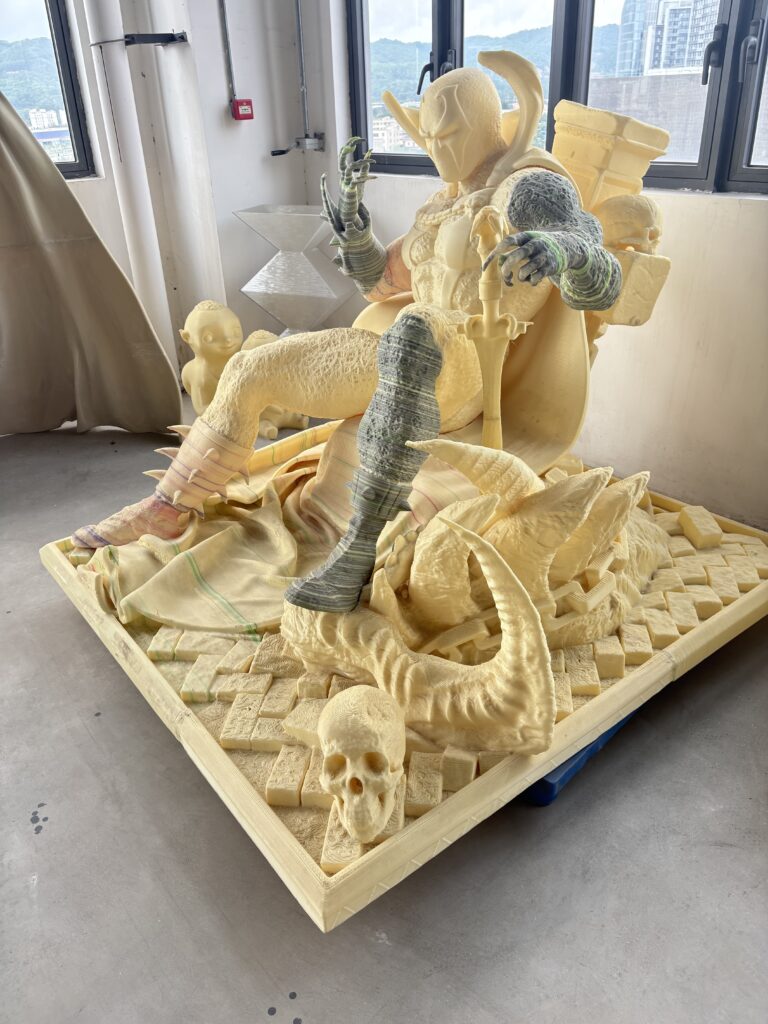
Art fabrication has historically been a slow, highly labor-intensive process governed by strict physical limits. Creating large public monuments, complex theatrical props, or intricate architectural facades typically required weeks of manual clay sculpting, delicate armature fabrication, and volatile plaster or silicone casting. If an artist needed to scale an artwork up or down, they often had to restart the entire physical process from scratch.
Modern 3D printed sculpture fabrication completely upends these traditional workflows. Digital tools allow sculptors, production designers, and architects to bypass weeks of manual carving, translating complex digital files directly into towering physical installations with pinpoint structural accuracy.
At G Factor, we engineer industrial-grade hardware designed to meet the unique demands of large-scale creative fabrication. Whether you are producing fine art maquettes, theme park installations, or oversized commercial props, our advanced sculpture 3D printer systems allow creative studios to dramatically accelerate production, reduce labor costs, and achieve unprecedented physical scales.
1. Core Advantages of Additive Fabrication for Fine Art and Theming
Integrating industrial additive manufacturing into a creative workshop does not replace the artist—it serves as a powerful technical extension. Industrial systems solve several long-standing bottlenecks inherent to traditional sculpture workshops:
Infinite Geometric Freedom
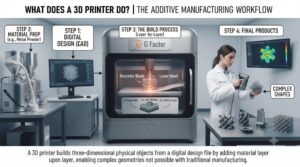
Traditional subtractive sculpting methods—such as carving foam, wood, or stone—are limited by tool access angles and material fragility. Interlocking internal spaces, intricate mathematical wireframes, and hyper-complex organic undercuts are incredibly difficult to execute by hand. 3D printing constructs models layer-by-layer from the ground up, allowing creators to materialize complex geometries that would be impossible to carve or cast using traditional molds.
Rapid, Perfect Scaling
If a gallery requests a 30-centimeter desktop maquette to be transformed into a 3-meter outdoor monument, traditional manual enlargement requires complex grid systems, pantographs, and extensive manual labor. With a digital workflow, scaling an artwork takes seconds in a slicing program. The exact proportions, fine details, and organic forms are preserved perfectly across any size variation.
Significant Weight Reduction
Solid clay, plaster, or concrete sculptures require heavy, internal steel support frames (armatures) to keep them from collapsing under their own mass during fabrication. These solid pieces are incredibly heavy, difficult to transport, and expensive to install safely.
Large-scale 3D printers allow operators to control the internal structure of the artwork completely. By utilizing lightweight, hollow-core slicing strategies combined with internal lattice infills, fabricators can produce massive monuments that look heavy and solid but remain remarkably light, easy to transport, and safe to hang or mount.
2. Technical Paths: FFF Filaments vs. FGF Pellets for Sculptures
The ideal printing method depends heavily on the physical scale of your art piece and the required level of surface detail:
High-Precision FFF (Fused Filament Fabrication)
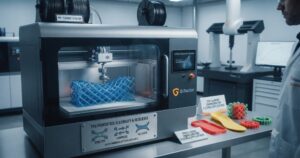
The industrial FFF series uses high-accuracy spooled filaments. It is the ideal technical choice for gallery-ready fine art miniatures, highly detailed master patterns for casting, and complex modular sculpture components.
When paired with fine-resolution nozzles and a stable FFF filament material ecosystem, FFF systems excel at producing:
-
Detailed Maquettes: Fine-resolution display models used for client pitches, gallery previews, and museum archives.
-
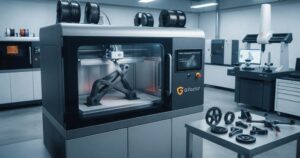
Theatrical Props & Costumes: Highly precise, wearable cosplay armor, movie props, and detailed character heads.
-
Master Patterns: Smooth, highly detailed plastic patterns used to create traditional silicone or sand molds for bronze casting.
Large-Format FGF (Fused Granular Fabrication)
When an art studio needs to fabricate a full-scale public monument, giant themed environment prop, or massive architectural installation, traditional filament systems can be too slow and cost-prohibitive. Our heavy-duty FGF technology feeds raw plastic pellets directly into a high-capacity extrusion head, maximizing speed and volume.
By utilizing high-grade FGF pellet materials, creative workshops capture massive structural advantages:
-
Expansive Build Volumes: G Factor’s large-format FGF systems offer build envelopes up to $3000 \times 2000 \times 1000\text{ mm}$, letting studios print massive figures or scenic backdrops as a single unified piece rather than splitting them into dozens of smaller parts.
-
Drastic Cost Savings: Raw plastic pellets are up to 80 percent cheaper than drawn filaments, keeping massive art projects highly profitable.
-
Blazing Speeds: Printing up to 10 times faster than standard filament printers means a human-sized figure can be printed in a matter of hours instead of weeks.
3. Dual Workflows: Direct Sculptures vs. Sacrificial Molds
Industrial 3D printers are highly versatile tools that support two distinct fabrication workflows depending on your final artistic medium:
1. Direct-to-Finish Production
In this workflow, the printed plastic object is the final artwork. Fabricators print the sculpture using durable polymers, apply post-processing surface treatments, and finish the piece with specialized paints, metallic leaf, or weather-resistant coatings. This is the fastest, most cost-effective method for indoor gallery exhibits, museum displays, and theme park scenery.
2. Sacrificial Molds for Traditional Materials
For public art pieces that must be cast in traditional mediums like bronze, aluminum, or concrete, 3D printing acts as a powerful intermediary tool.
-
Printed Molds: Studios print the negative shell of the sculpture directly, fill it with concrete or plaster, and break away the plastic shell once cured.
-
Investment Casting Patterns: Artists print the sculpture using specialized low-ash, clean-burning filaments or pellets. The print is embedded in ceramic shell slurry and burned out cleanly in a kiln, leaving a perfect cavity ready for molten bronze.
4. Comparing Art Production Methods
| Fabrication Attribute | Traditional Manual Sculpting & Casting | G Factor Industrial 3D Printing |
| Production Speed | Slow (Weeks to months of hand-carving and molding) | Rapid (Hours or days from digital file to physical form) |
| Design Flexibility | Limited (Changes require destructive physical alterations) | High (Instantly adjust scale, proportions, or details in CAD) |
| Material Efficiency | Low (Substantial clay, plaster, or foam waste) | High (Near-zero waste; material is deposited only where needed) |
| Structural Mass | Heavy (Solid materials require complex internal armatures) | Lightweight (Hollow parts with engineered internal lattice infill) |
| Replicability | Difficult (Recreating a piece requires manual molding) | Perfect (Print identical copies or exact scale variants instantly) |
5. Advanced Materials for Long-Lasting Art Installations
Public art must withstand UV exposure, high humidity, thermal changes, and physical interaction. G Factor supports a diverse, high-grade material ecosystem to ensure your sculptures stand the test of time:
-
ASA (Acrylonitrile Styrene Acrylate): The gold standard for outdoor installations. ASA possesses exceptional mechanical properties and elite UV resistance, ensuring it will not yellow, degrade, or become brittle under direct sunlight.
-
PETG (Polyethylene Terephthalate Glycol): Offers great impact resistance, ease of printing, and excellent optical clarity for illuminated or translucent art pieces.
-
Recycled Pellets & Bio-Polymers: Perfect for eco-conscious artists and sustainable public art initiatives, minimizing environmental impact without sacrificing structural integrity.
6. Post-Processing: Achieving Flawless Artistic Finishes
While industrial systems offer high precision, the layer lines inherent to additive manufacturing are sometimes undesirable for fine art. The raw print serves as an incredibly accurate canvas for classic finishing techniques:
-
Sanding & Priming: High-build automotive primers combined with progressive sanding quickly eliminate visible layer lines, creating a perfectly smooth, stone-like surface.
-
Vapor Smoothing: Exposing specific materials to chemical vapors smooths out the outer surface layer instantly, delivering a glossy, injection-molded look.
-
Metallic Coating & Plating: Printed sculptures can be spray-coated with real atomized metal cold-casts or electroplated to achieve authentic bronze, copper, or chrome finishes at a fraction of the cost of solid foundry casting.
7. Frequently Asked Questions (FAQ)
How visible are the layer lines on large-scale printed sculptures?
It depends on the technology used. High-precision FFF systems feature thin, subtle layer lines that require very little post-processing. Large-format FGF pellet systems use larger nozzles for speed, resulting in thicker, more prominent texture lines. Many artists embrace this distinct texture as a mark of modern digital craftsmanship, while others quickly fill and sand the lines down for a smooth finish.
Can 3D-printed sculptures survive permanent outdoor placement?
Yes. By utilizing industrial materials like UV-stabilized ASA or specialized outdoor-grade composite pellets, printed sculptures can withstand intense sunlight, heavy rain, and seasonal temperature swings without losing their structural integrity.
What makes G Factor a reliable partner for art fabrication studios?
Founded in 2025, G Factor builds robust, continuous-duty industrial FFF and large-format pellet FGF machines engineered to handle massive, multi-day creative prints without failing. To review our machinery specs, company values, and manufacturing standards, please visit our about us page.
Can I print a sculpture that is larger than the machine’s build chamber?
Absolutely. Large digital models can be easily sliced into interlocking interlocking sections within your preparation software, printed individually, and permanently bonded together using structural adhesives on-site for unlimited final scales.
8. Bring Your Digital Art to Life
The separation between digital imagination and physical reality has dissolved. Continuing to rely entirely on slow, manual casting and carving cycles limits the scale of your art projects, inflates your workshop overhead, and lengthens your production timelines. By integrating an industrial sculpture 3D printer into your fabrication workflow, you unlock total geometric freedom, slash turnaround times, and scale your creative vision to grand proportions.
Next Steps for Creative Studios:
-
Assess Your Production Bottlenecks: Identify upcoming projects that demand massive scaling, complex geometry, or rapid turnarounds.
-
Select Your Extrusion Platform: Choose between fine-detail FFF filament systems or rapid, large-scale FGF pellet systems.
-
Consult with Additive Specialists: Partner with our technical team to match your artistic medium with the perfect hardware and material configuration.
Elevate Your Fabrication Capabilities Today
G Factor provides the large-format hardware, precise thermal controls, and extensive material expertise required to execute high-impact art installations reliably. Explore our full additive lineup on our official homepage, or connect with our engineering team directly to schedule a project review.