The furniture design and manufacturing industry is experiencing an unprecedented digital awakening. For generations, creating high-end, custom, or complex furniture pieces meant relying on slow, subtractive woodwork, expensive metal fabrication, or highly restrictive injection molding tooling. Today, furniture 3D printing breaks down these old boundaries. It allows designers and commercial furniture manufacturers to move directly from a digital blueprint to a physical, structural product in a matter of hours.
The shift toward large-format additive manufacturing is driven by a market demanding hyper-customization, structural organic shapes, and circular economy sustainability. No longer confined to small, brittle desktop prints, modern industrial printers can output full-sized chairs, architectural tables, intricate partition walls, and durable outdoor seating components using structurally reinforced engineering polymers.
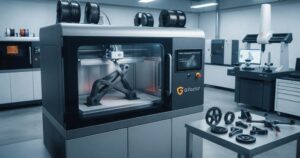
At G Factor, we engineer the ultra-large-format hardware, advanced high-flow extrusion systems, and robust material paths necessary to scale commercial furniture production. Whether you are creating small runs of high-concept statement furniture or durable structural frames, our specialized furniture 3D printer systems eliminate high tooling costs and give you complete geometric freedom.
1. Core Value Drivers of 3D Printing in Commercial Furniture
Traditional industrial furniture production requires scale to achieve profitability. Mold production for a single signature plastic shell chair can cost tens of thousands of dollars and take months to refine. This financial reality stifles creative experimentation and locks businesses into long production runs of identical designs.
Industrial 3D printing shifts the economics of furniture production, unlocking several core competitive advantages:
Absolute Geometric Freedom
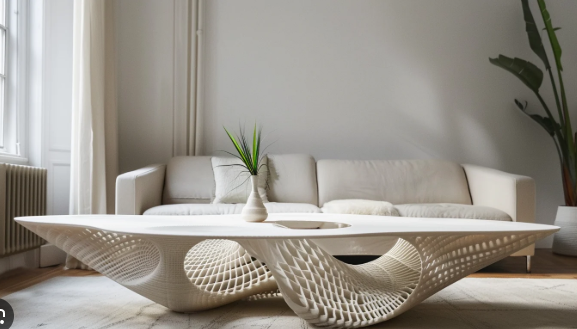
Traditional woodworking and injection molding are bound by strict rules regarding draft angles, uniform wall thicknesses, and tool access path limits. Additive layering lets you ignore these restrictions. Designers can implement fluid, organic, biomimetic shapes—like sweeping single-surface lounge chairs or complex interlocking structural bases—that would be impossible to cast, carve, or machine using conventional tools.
Drastic Reduction in Lead Times
With a digital-to-physical workflow, a new concept can be drawn in CAD, optimized for loading vectors, and sent directly to an industrial printer layout. A fully functional, production-ready lounge chair or structural console base can be completed in less than 24 hours. This agility slashes your time-to-market from months down to a few days, allowing your business to respond to interior design trends in real time.
Sustainable and Circular Production
The modern commercial interior sector places a premium on sustainable materials. Traditional furniture production generates substantial waste from subtractive carving, trimming, and excess material scrap. 3D printing is inherently additive; it places material exactly where structural performance demands it. Furthermore, by utilizing recycled and pelletized engineering polymers, manufacturers can produce high-end furniture items that can be completely ground down and re-printed at the end of their lifecycle, achieving a true zero-waste circular model.
2. Choosing Your Technology: FFF vs. FGF for Large-Scale Furniture
The ideal additive manufacturing methodology for furniture depends heavily on your desired part dimensions, structural performance goals, and raw material economics. G Factor provides dual-tier industrial polymer systems designed to match these distinct production demands:
High-Precision FFF (Fused Filament Fabrication)
The industrial FFF series utilizes high-accuracy, spool-fed thermoplastic filaments. It is the premier choice for intricate furniture components, mechanical joinery, high-fidelity lighting fixtures, or highly detailed architectural accents.
When paired with advanced FFF filament materials—including Carbon Fiber Reinforced Nylon (PA-CF), tough Polycarbonate (PC), and high-strength PETG—FFF systems excel at producing:
-
Intricate Joinery & Connectors: Creating custom high-strength structural nodes for modular shelving or table frames.
-
Architectural Accents & Lighting: Printing complex, light-diffusing translucent textures or open lattice panel designs.
-
Ergonomic Components: Fabricating targeted armrests, structural levers, or internal support frames with tight engineering tolerances.
High-Throughput FGF (Fused Granular Fabrication)
For printing full-scale furniture pieces like monolithic lounge chairs, large dining table bases, or expansive outdoor benches, filament printing is often too slow and expensive. Our industrial FGF technology bypasses filament production entirely, feeding raw plastic pellets directly into a high-capacity, screw-driven pellet extruder.
By leveraging high-grade FGF pellet materials, furniture manufacturers realize massive structural and financial advantages:
-
Massive Volumetric Extrusion: Flow rates up to 10 to 15 times faster than traditional filament extrusion allow massive, multi-meter furniture items to be completed within a single work shift.
-
Unrivaled Material Economy: Raw plastic pellets cost a fraction of processed filaments. This makes printing large, heavy objects economically competitive with traditional high-end manufacturing.
-
Expansive Build Volumes: G Factor’s large-scale FGF pellet systems offer massive build envelopes up to $3000 \times 2000 \times 1000\text{ mm}$ with nozzle temperatures reaching 450°C. This allows you to print entire structural frames as a single, ultra-robust unit without seams or weak joint lines.
3. Real-World Applications in Modern Furniture Manufacturing
Industrial additive manufacturing acts as a versatile tool across all phases of the furniture supply chain, bridging the gap between artistic luxury design and rapid, high-volume contract furniture supply.
High-End Custom Contract Furniture
Commercial real estate, luxury hotels, and modern co-working spaces frequently require bespoke, site-specific furniture installations that match unique architectural spaces. Instead of dealing with the high costs of custom metal or wood fabrication, contract furniture suppliers use large-format 3D printers to fabricate custom reception desks, unique modular banquettes, or custom-contoured bench seating tailored to the exact footprint of a building.
Rapid Scale & Full-Size Prototyping
Even if your final production run is intended for traditional manufacturing, 3D printing is invaluable for verifying ergonomics, scale, and mechanical balance. Designers can print full-scale structural models within 24 hours to test comfort, sitting height, and structural deflection before making major capital investments in final manufacturing tooling.
Outdoor & Urban Infrastructure Furniture
Outdoor public seating, commercial restaurant patios, and urban benches require materials that can withstand intense UV exposure, continuous moisture, and heavy physical abuse. Large-format 3D printers excel at producing monolithic, thick-walled public furniture units that naturally shed water, resist vandalism, and remain structurally sound across years of seasonal weather changes.
4. Comparing Manufacturing Methodologies: Wood/Molding vs. 3D Printing
| Performance Metric | Traditional Molding & Wood Fabrications | G Factor Large-Format Additive Manufacturing |
| Initial Tooling Investment | High (Thousands of dollars for steel molds/custom jigs) | Zero (Direct digital to print via CAD models) |
| Lead Time for New Designs | 4 to 12 Weeks (For tooling creation and validation) | 24 to 48 Hours (Direct production from digital asset) |
| Design Flexibility | Limited by grain direction, draft angles, and mold separation | Virtually Unlimited (Organic sweeps, internal lattices, undercut curves) |
| Material Waste Profile | High (Subtractive sawdust, wood off-cuts, and flashing resin) | Minimal (Material is placed precisely layer-by-layer where needed) |
| Hyper-Customization Support | Poor (Modifying sizing requires entirely new molds/setups) | Excellent (Scale, tweak, or alter geometry instantly in software) |
5. Industrial Engineering Polymers for Furniture Production
The functional life and structural integrity of a 3D-printed furniture piece depend entirely on the engineering polymer running through your machine. Furniture components must support significant, continuous loads without experiencing structural deformation or sagging over time.
Modern manufacturing relies on an expansive, verified material ecosystem to handle these everyday stress factors reliably:
-
Carbon-Fiber-Reinforced Polymers (PA-CF / PETG-CF): Carbon fiber strands mixed into nylon or PETG pellets add incredible rigidity and minimize structural creep. This makes them ideal for structural chair frames, cantilevered bases, and load-bearing legs.
-
High-Performance ASA (Acrylonitrile Styrene Acrylate): Exceptional resistance to UV radiation, moisture, and chemical cleaners makes ASA the premier choice for high-end outdoor loungers and public park benches.
-
Recycled Engineering Thermoplastics (rPET / rPP): Sourced from post-industrial waste streams, these eco-friendly pellets provide excellent tensile strength and deep structural durability while satisfying the strictest corporate sustainability requirements.
6. Frequently Asked Questions (FAQ)
Can 3D-printed furniture handle the continuous weight of a person without bending or breaking?
Yes, when engineered correctly. By using carbon-fiber-reinforced pellets and optimizing your print settings (such as layer height, shell thickness, and internal structural infill patterns), 3D-printed furniture easily meets standard international weight and stability ratings for commercial use.
Why are pellet-fed FGF systems preferred over filament systems for furniture production?
Furniture pieces are physically large and require deep structural integrity. Pellet-fed systems utilize larger nozzle diameters (typically 2mm to 8mm or more) to deposit thick, robust layers quickly. This results in significantly stronger layer adhesion, much shorter print times, and an 80 percent reduction in raw material costs compared to spooled filaments.
What structural build capacity can your systems handle?
G Factor, founded in 2025, specializes in large-format industrial FFF and high-throughput pellet FGF systems designed for stable, multi-day production runs. To learn more about our engineering standards, regional deployment networks, and customer case studies across Asia, you can explore our about us page.
Can the layer lines on 3D-printed furniture be smoothed or finished?
Absolutely. While many designers embrace the distinct aesthetic of raw, industrial 3D print layers, the surfaces can be sanded, CNC milled, primed, and painted, or wrapped in leather or upholstery fabrics to match any high-end interior finish.
How can our design studio begin integrating a furniture 3D printer?
The cleanest path is to evaluate your current production costs, outsourcing delays, and geometric bottlenecks. Check out our dedicated furniture 3D printer solutions, and then contact our engineering team directly to set up a technical application and material review.
7. Stepping into the Future of Furniture Production
The commercial furniture industry is moving toward a highly responsive, localized, and sustainable production model. Continuing to rely solely on rigid, high-cost overseas injection molds or intensive manual woodwork leaves your business exposed to supply chain friction and slow design iterations. Integrating large-format industrial 3D printing onto your shop floor allows you to capture custom design work instantly, reduce raw material waste, and bring bold concepts to life overnight.
Strategic Action Items for Furniture Operations:
-
Audit Your Catalog: Identify complex, low-volume, or highly customized statement pieces that face long production lead times.
-
Optimize for Sustainability: Introduce recycled polymer pellet workflows to capture the growing eco-conscious corporate design market.
-
Localize on Demand: Build a secure digital asset library of your designs, allowing pieces to be printed exactly where and when they are sold.
Deploy the Future of Furniture Manufacturing Today
G Factor provides the industrial machinery, engineering support, and specialized material expertise required to transform your design workflows into high-speed production realities. Explore our complete additive hardware ecosystem on our official homepage or connect with our engineering team directly to begin your digital transformation.
-
Technical Consulting Line: +65 9007 9627
-
Engineering Department Email: lichen@gfac.sg
-
Global Operations Center: 50 Bukit Batok Street 23, #05-32 Midview Building, Singapore 659578