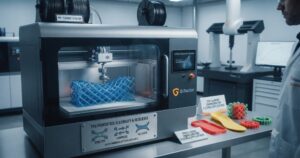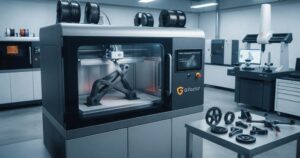
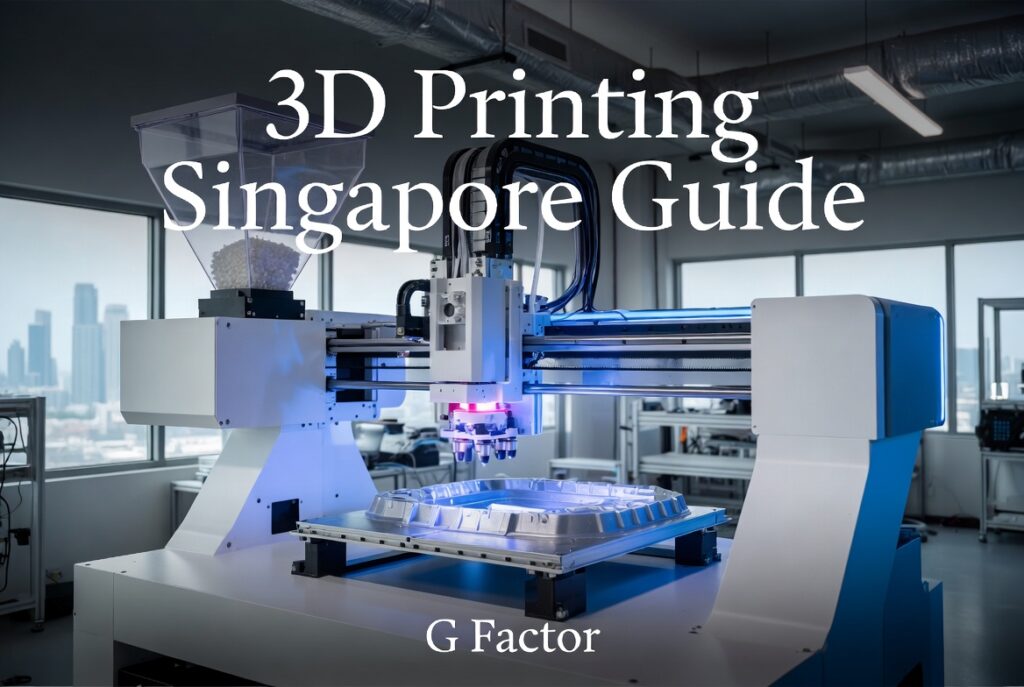
If you’re searching for a 3D Printing Singapore Guide — 3d printing singapore, you’re probably trying to understand how modern additive manufacturing actually works in real production environments—not just desktop hobby printing.
This guide breaks it down in a practical way: how industrial 3D printing is used in Singapore today, what technologies matter (FFF vs FGF), how companies reduce production costs, and where large-format systems fit into real manufacturing workflows.
At GFac, we work directly with large-format industrial 3D printing systems used across automotive, aerospace, architecture, and tooling industries. This guide is built from real engineering and production experience—not theory—so you can understand what actually matters when choosing a system or starting a project.
You’ll learn:
- How industrial 3D printing works in Singapore’s manufacturing ecosystem
- Differences between filament (FFF) and pellet (FGF) printing
- Real-world use cases and production workflows
- Material selection strategies
- Cost structure and scalability insights
- How companies move from prototype to full production
What is 3D Printing in Singapore’s Industrial Context?
Industrial 3D printing in Singapore refers to the use of additive manufacturing technologies to produce functional parts, prototypes, tooling, and end-use components for commercial industries.
Unlike hobby printers, industrial systems focus on:
- Large-scale production
- Engineering-grade materials
- Repeatability and stability
- Cost efficiency per part
- Integration into manufacturing workflows
Definition (Simple)
3D printing = manufacturing objects layer by layer using digital models instead of subtractive machining or molds.
In Singapore, this technology is increasingly used in:
- Advanced manufacturing (AM)
- Aerospace engineering
- Marine and shipbuilding
- Automotive prototyping
- Architecture & design fabrication
Why 3D Printing is Growing in Singapore (2026 Perspective)
Singapore is actively positioning itself as a high-value advanced manufacturing hub in Asia.
Key drivers:
- Government support for Industry 4.0 adoption
- High labor cost encouraging automation
- Demand for rapid prototyping and customization
- Shorter product development cycles
- Sustainability pressure (less waste manufacturing)
According to industry research from ISO/ASTM additive manufacturing standards bodies, global additive manufacturing adoption is growing at double-digit CAGR, especially in Asia-Pacific manufacturing hubs.
Core Technologies in Industrial 3D Printing
When exploring 3d printing singapore solutions, you’ll encounter two dominant industrial technologies:
1. FFF (Fused Filament Fabrication)
FFF uses thermoplastic filament (like PLA, ABS, PETG, engineering polymers).
Best for:
- Precision parts
- Small to mid-size production
- Functional prototypes
- Engineering validation
👉 Learn more about systems:
FFF filament printers
2. FGF (Fused Granular Fabrication)
FGF uses plastic pellets instead of filament.
This is where industrial-scale manufacturing really begins.
Best for:
- Large-format parts
- Low-cost mass production
- Tooling and molds
- Industrial components
👉 Explore systems:
FGF pellet printing systems
FFF vs FGF — Practical Comparison (Industrial Use)
| Feature | FFF (Filament) | FGF (Pellet) |
|---|---|---|
| Material cost | Higher | Lower (up to 60–80% savings) |
| Build size | Small–medium | Large-scale (up to 3m+) |
| Precision | High | Medium–high |
| Speed | Moderate | High (bulk deposition) |
| Best use case | Prototypes | Production parts |
| Industry usage | R&D labs | Manufacturing lines |
[Image Suggestion: Side-by-side FFF vs FGF industrial printing comparison]
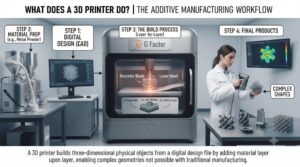
How Industrial 3D Printing Works (Step-by-Step)
Step 1: CAD Design Creation
Engineers design parts using software like SolidWorks, Fusion 360, or CATIA.
Step 2: Material Selection
Material choice depends on:
- Heat resistance
- Strength requirements
- Flexibility
- Chemical exposure
Explore materials:
3D printing materials
Step 3: Slicing Process
The digital model is converted into machine instructions (G-code).
Step 4: Printing Execution
The printer builds layer by layer using controlled extrusion.
Step 5: Post-Processing
Includes:
- Surface finishing
- Heat treatment
- Assembly
Industrial Applications in Singapore
Automotive Industry
- Prototype bumpers
- Custom tooling
- Lightweight structural parts
Aerospace Engineering
- Wind tunnel models
- Lightweight brackets
- Fixture tooling
Architecture & Construction
- Scale models
- Facade prototypes
- Design validation structures
Marine Engineering
- Hull prototypes
- Custom fittings
- Repair components
Medical Applications
- Surgical models
- Anatomical replicas
- Device prototyping
Case Insight: Large-Scale Manufacturing with FGF Systems
In real production environments, companies using FGF pellet systems often reduce prototyping and tooling costs significantly.
Example workflow:
- Replace CNC machining for non-metal tooling
- Produce molds directly from CAD
- Print full-size architectural components in one piece
At GFac, our systems are designed for:
- Large build volumes (up to 3000×2000×1000mm)
- High-temperature materials (up to 450°C nozzle systems)
- Continuous industrial production
👉 Explore solutions:
Industrial 3D printing solutions
Materials Used in Industrial 3D Printing
Common FFF Materials:
- PLA (biodegradable prototypes)
- ABS (durable industrial parts)
- PETG (chemical resistance)
- PLA-CF (carbon fiber strength)
Common FGF Pellets:
- PC+CF (high strength)
- PA+GF (heat resistance)
- TPU (flexible components)
- PP+GF (chemical durability)
👉 Full list:
FFF filament materials
FGF pellet materials
Cost Structure of 3D Printing in Singapore
| Cost Factor | FFF Printing | FGF Printing |
|---|---|---|
| Material cost | High | Low |
| Machine cost | Low–mid | High |
| Production scale | Limited | Industrial |
| ROI timeline | Medium | Fast in bulk production |
Key Insight:
FGF systems become significantly more cost-effective when producing large parts or batch manufacturing.
Common Mistakes in Industrial 3D Printing
1. Choosing wrong material
Not all plastics behave the same under heat or stress.
2. Ignoring thermal expansion
Large parts require controlled chamber environments.
3. Using desktop systems for industrial jobs
This leads to failures and inconsistent results.
4. Poor slicing settings
Incorrect layer height or speed reduces structural integrity.
Best Practices (Expert Insights)
- Always validate CAD before printing
- Choose pellet systems for large-scale production
- Test material shrinkage before final production
- Use closed-loop servo systems for accuracy
- Keep maintenance schedules strict
Why Singapore Companies Are Moving Toward Large-Format Printing
Three major shifts are happening:
- Faster prototyping cycles
- Localized manufacturing (less overseas dependency)
- Cost reduction through automation
Companies adopting industrial 3D printing are seeing:
- Reduced lead times
- Lower tooling costs
- Greater design freedom
About GFac Industrial 3D Printing Systems
GFac specializes in large-format FFF and FGF additive manufacturing systems designed for industrial-scale production.
We focus on:
- High-temperature extrusion systems
- Screw-driven pellet technology
- Large build volume machines
- Multi-industry applications
👉 Learn more:
About GFac
👉 Contact engineers:
Contact our team
FAQ — 3D Printing Singapore Guide
1. What is 3D printing used for in Singapore?
It is used for prototyping, tooling, manufacturing parts, and industrial design applications.
2. Is 3D printing expensive in Singapore?
Costs depend on material and scale. Industrial FGF systems reduce cost per part significantly.
3. What industries use 3D printing most?
Automotive, aerospace, architecture, marine, and medical sectors.
4. What is the difference between FFF and FGF?
FFF uses filament; FGF uses pellets and is better for large-scale production.
5. Can 3D printing replace traditional manufacturing?
Not fully, but it complements CNC and molding for flexible production.
6. What materials are used in industrial 3D printing?
PLA, ABS, PETG, PC-CF, PA-GF, TPU, and more engineering polymers.
7. How big can industrial 3D printers go?
Some systems exceed 3 meters in build volume for large parts.
8. Is 3D printing sustainable?
Yes, it reduces material waste compared to subtractive manufacturing.
9. Where can I get industrial 3D printing in Singapore?
Specialized manufacturers like GFac provide large-format systems and solutions.
Call-to-Action
If you’re exploring 3D Printing Singapore Guide — 3d printing singapore for industrial applications, the next step is understanding which system fits your production goals.
👉 Explore our technology:
👉 Or speak with our engineers:
Contact our team