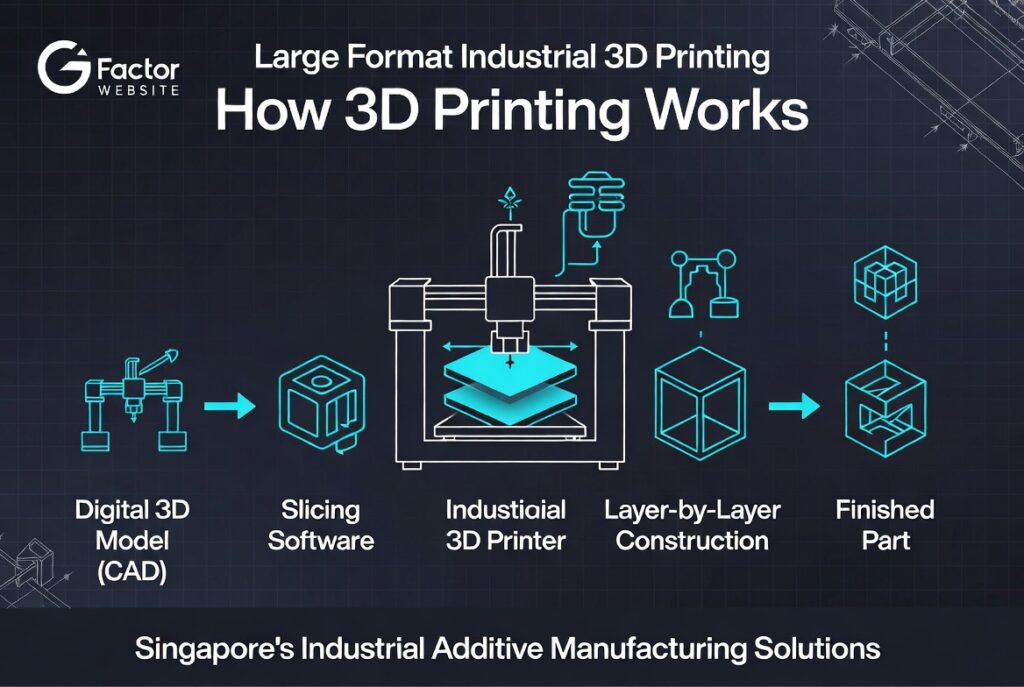
3D printing has completely changed how products are designed, tested, and manufactured. What once required expensive tooling, long production cycles, and complex machinery can now be produced layer by layer using advanced additive manufacturing systems.
But many people still ask the same question: How does 3D printing work?
Whether you are a beginner learning about additive manufacturing or a business exploring industrial production technology, understanding the process is easier than most people think.
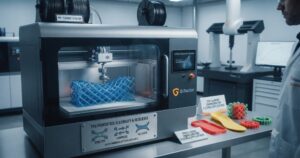
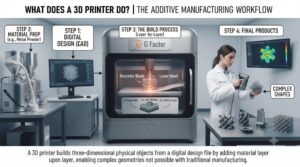
In simple terms, 3D printing works by creating physical objects from a digital design. The printer builds the object layer by layer using materials such as plastic filament, industrial pellets, carbon-fiber composites, or engineering-grade polymers.
Today, industries including automotive, aerospace, architecture, marine, medical, furniture, and sculpture manufacturing rely on industrial 3D printing for faster production, reduced costs, and greater design flexibility.
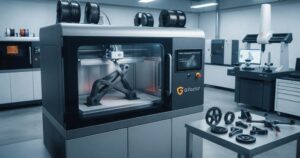
At GFac Singapore Industrial 3D Printing Solutions, advanced large-format FFF and FGF printers help businesses manufacture prototypes, tooling, molds, and full-scale industrial components more efficiently.
In this guide, you’ll learn:
- How 3D printing works step by step
- What software and materials are used
- The difference between FFF and FGF printing
- How industrial additive manufacturing systems operate
- Real-world applications of large-format 3D printing
What Is 3D Printing?
3D printing, also called additive manufacturing, is a process that creates three-dimensional objects by adding material layer by layer based on a digital model.
Unlike traditional manufacturing methods such as:
- Cutting
- Drilling
- Milling
- Machining
- Injection molding
3D printing builds objects gradually instead of removing material.
This approach reduces waste while allowing manufacturers to create highly complex shapes and customized parts that are difficult to produce using conventional methods.
Modern industrial 3D printers can manufacture:
- Automotive tooling
- Aerospace components
- Industrial molds
- Architectural structures
- Marine prototypes
- Medical models
- Large-scale sculptures
The Basic Principle Behind 3D Printing
The concept of additive manufacturing is actually very simple.
Imagine stacking hundreds or thousands of extremely thin layers on top of each other until they form a complete object.
That’s how 3D printing works.
Each layer bonds with the previous layer until the final shape is complete.
Depending on the technology used, the printer may melt:
- Plastic filament
- Industrial pellets
- Resin
- Powder-based materials
Industrial additive manufacturing systems use highly precise movement systems and temperature controls to ensure each layer is printed accurately.
Step 1: Creating the Digital 3D Model
Every 3D printed object begins with a digital design.
This design is usually created using CAD software (Computer-Aided Design).
Popular CAD Software for 3D Printing
| Software | Common Applications |
|---|---|
| SolidWorks | Engineering and manufacturing |
| Fusion 360 | Product development |
| Blender | Creative modeling |
| Rhino | Industrial design |
| AutoCAD | Architecture |
The designer creates a virtual model with exact dimensions and geometry.
For industrial manufacturing, engineers often optimize the design specifically for additive manufacturing. This process is known as:
DfAM (Design for Additive Manufacturing)
Why the Design Stage Is Important
The quality of the digital model directly affects the final print.
Poorly designed files can lead to:
- Weak structures
- Printing failures
- Material waste
- Surface defects
- Warping
Well-optimized designs improve:
- Strength
- Printing speed
- Surface finish
- Material efficiency
This is especially important in industrial production environments.
Step 2: Exporting the File for Printing
Once the 3D model is complete, the file must be converted into a format the printer can understand.
The most common file formats include:
- STL
- OBJ
- 3MF
These files contain the geometry and structure of the object.
Think of them as the blueprint for the 3D printer.
Step 3: Slicing the 3D Model Into Layers
A 3D printer cannot directly print the design file.
First, slicing software converts the object into hundreds or thousands of printable layers.
This process is called slicing.
What Does Slicing Software Do?
The slicer generates instructions called G-code, which tells the printer:
- Where to move
- How fast to print
- Material temperature
- Layer thickness
- Cooling settings
- Extrusion speed
Step 4: Preparing the 3D Printer
Before printing begins, the machine must be properly configured.
This includes:
- Loading material
- Heating the nozzle
- Leveling the build platform
- Checking calibration
- Preparing feeding systems
Industrial printers require additional setup due to their larger scale and advanced features.
At GFac FFF Industrial Printers, industrial systems include:
- Closed-loop servo motors
- Auto leveling
- Filament detection
- High-temperature nozzles
- Large-format build volumes
These features improve production consistency and printing accuracy.
Step 5: Heating and Extruding the Material
Once the machine is ready, the printer begins heating the material.
The material melts and passes through a nozzle with controlled precision.
The nozzle moves according to the instructions generated during the slicing process.
This is when the physical object starts forming layer by layer.
How FFF 3D Printing Works
FFF stands for:
Fused Filament Fabrication
This process uses plastic filament wound onto spools.
The filament feeds into a heated nozzle where it melts before being deposited layer by layer.
Common FFF Materials
FFF systems commonly use:
- PLA
- ABS
- PETG
- PLA-CF
Learn more here:
FFF Filament Materials
Each material offers different properties related to:
- Strength
- Flexibility
- Heat resistance
- Printability
How FGF 3D Printing Works
FGF stands for:
Fused Granular Fabrication
Instead of filament, FGF systems use plastic pellets.
This technology is becoming increasingly popular for industrial large-format manufacturing.
At GFac FGF Industrial Printers, advanced screw extrusion systems melt and extrude pellet materials efficiently for large-scale production.
Why Manufacturers Use FGF Systems
FGF technology provides:
- Lower material costs
- Faster print speeds
- Larger nozzle diameters
- Massive build capacities
- Better scalability
This makes FGF ideal for:
- Automotive tooling
- Marine molds
- Furniture manufacturing
- Architectural structures
- Large sculptures
Step 6: Building the Object Layer by Layer
This is the core of additive manufacturing.
The printer deposits material one layer at a time according to the G-code instructions.
Each layer bonds with the previous one until the object is complete.
Depending on the print size, the process may take:
- Minutes
- Hours
- Multiple days
Large-format industrial parts naturally require longer production times.
Factors That Affect 3D Print Quality
Several variables influence the final print result.
| Factor | Impact on Print Quality |
|---|---|
| Layer height | Surface smoothness |
| Temperature | Layer bonding |
| Print speed | Accuracy |
| Cooling | Warping control |
| Nozzle size | Detail vs speed |
Industrial systems use advanced control systems to maintain production stability during long manufacturing cycles.
Step 7: Using Support Structures for Complex Parts
Some 3D models contain:
- Overhangs
- Curves
- Hollow sections
- Sharp angles
These areas may collapse during printing without temporary supports.
To solve this, slicing software automatically creates support structures.
After printing, the supports are removed manually or mechanically.
Why Supports Matter
Supports make it possible to print:
- Complex industrial geometries
- Internal channels
- Lightweight lattice structures
- Advanced engineering components
Step 8: Cooling and Solidifying the Material
After extrusion, the material cools and hardens.
Different materials require different cooling conditions.
For example:
- PLA cools quickly
- ABS needs controlled temperatures
- Carbon-fiber materials require thermal stability
Industrial enclosed printers help reduce:
- Warping
- Cracking
- Layer separation
This is especially important for large-format additive manufacturing.
Step 9: Post-Processing the Finished Part
Once printing is complete, the part may require additional finishing.
This stage is known as post-processing.
Common Post-Processing Methods
Sanding
Improves surface quality.
Painting
Enhances appearance and protection.
CNC Machining
Adds high precision to industrial components.
Heat Treatment
Improves material strength and durability.
Polishing
Creates smoother surfaces for production or display.
Some advanced industrial systems combine additive and subtractive manufacturing in one workflow.
Materials Used in Industrial 3D Printing
Materials determine the strength, durability, flexibility, and heat resistance of printed parts.
Common FFF Filament Materials
- PLA
- ABS
- PETG
- PLA-CF
Explore material options here:
FFF Printing Materials
Industrial FGF Pellet Materials
FGF systems support advanced engineering materials including:
- ABS
- TPU
- PA+GF
- PC+CF
- PP+GF
- PESU+CF
- PPS+CF
Learn more:
FGF Pellet Materials Guide
Why Large-Format 3D Printing Is Growing Rapidly
Large-format additive manufacturing is transforming industrial production.
Modern systems can produce objects measuring several meters in size.
This allows manufacturers to create:
- Automotive molds
- Architectural panels
- Furniture components
- Marine tooling
- Full-scale prototypes
At About GFac Singapore, large-format FFF and FGF technologies are specifically designed for industrial manufacturing applications.
Real-World Applications of 3D Printing
Today, additive manufacturing is used across many industries.
Automotive Manufacturing
- Prototype development
- Tooling
- Custom body panels
- Jigs and fixtures
Aerospace Industry
- Lightweight structures
- Engineering prototypes
- Precision tooling
Architecture and Construction
- Scale models
- Facade elements
- Design visualization
Sculpture and Art
- Museum installations
- Event displays
- Public sculptures
Marine Industry
- Hull prototypes
- Large molds
- Specialized tooling
Advantages of 3D Printing
Faster Product Development
Designs move from concept to production quickly.
Reduced Material Waste
Only the required material is used.
Greater Design Freedom
Complex geometries become possible.
Lower Tooling Costs
Many applications eliminate expensive molds.
Better Customization
Products can be modified without redesigning the production line.
Challenges and Limitations of 3D Printing
Although additive manufacturing offers many advantages, there are still challenges.
Surface Finish Requirements
Some parts require additional finishing work.
Production Speed
Traditional manufacturing may still be faster for extremely high-volume production.
Equipment Investment
Industrial systems require higher upfront costs.
However, the long-term production savings can be significant.
The Future of Industrial 3D Printing
The additive manufacturing industry continues evolving rapidly.
Future developments include:
- AI-assisted manufacturing
- Smart factory automation
- Sustainable materials
- Hybrid production systems
- Automated quality control
Organizations like ASTM International and Wohlers Associates continue reporting major growth in industrial additive manufacturing worldwide.
Frequently Asked Questions About How 3D Printing Works
How does a 3D printer create an object?
A 3D printer creates objects by depositing material layer by layer according to a digital model and G-code instructions.
What software is used for 3D printing?
CAD software creates the design, while slicing software converts the model into printable instructions.
What materials are used in industrial 3D printing?
Industrial printers use:
- PLA
- ABS
- PETG
- TPU
- Carbon-fiber composites
- Engineering pellets
What is the difference between FFF and FGF printing?
FFF uses filament, while FGF uses pellets. FGF systems are generally faster and more cost-efficient for large-scale industrial manufacturing.
Can 3D printing be used for mass production?
Yes. Modern industrial additive manufacturing systems are increasingly used for tooling, molds, and large-scale manufacturing applications.
Final Thoughts
Understanding how 3D printing works helps explain why additive manufacturing is becoming one of the most important technologies in modern manufacturing.
From rapid prototypes to massive industrial production systems, 3D printing allows companies to reduce waste, improve flexibility, lower tooling costs, and manufacture complex designs more efficiently.
Large-format FFF and FGF technologies are especially transforming industries such as automotive, aerospace, marine, architecture, furniture, and sculpture production.
As industrial additive manufacturing continues advancing, businesses that adopt these technologies early will gain major advantages in speed, customization, and production efficiency.