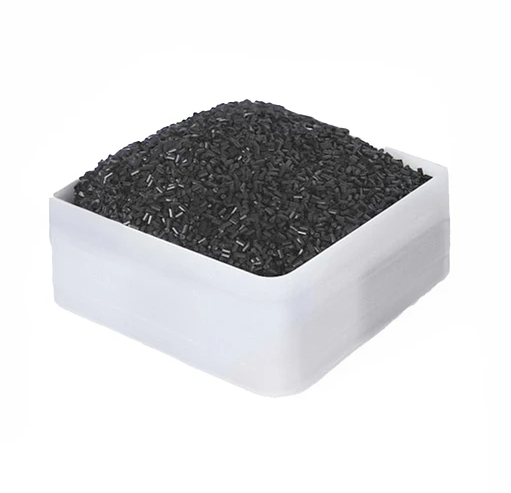
PPS+CF (Polyphenylene Sulfide + Carbon Fiber) is an ultra-high-performance engineering composite designed for both FFF (Fused Filament Fabrication) and FGF (Fused Granulate Fabrication) 3D printing. By combining the exceptional thermal and chemical resistance of Polyphenylene Sulfide (PPS) with the superior stiffness of carbon fibre reinforcement, PPS+CF delivers outstanding mechanical strength, dimensional stability, and long-term durability. It is widely used in aerospace, automotive, energy, electronics, chemical processing, and advanced industrial manufacturing.
PPS+CF is one of the most advanced 3D printing materials for industrial additive manufacturing, offering exceptional performance in harsh operating environments where conventional engineering plastics cannot perform reliably. Carbon fibre reinforcement significantly enhances the rigidity and structural integrity of PPS while maintaining its excellent resistance to heat, chemicals, wear, and corrosion. Available as both filament for FFF printers and pellets for FGF systems, PPS+CF enables manufacturers to produce precision engineering parts as well as large-format industrial components with exceptional reliability and long service life.
Why Choose PPS+CF for 3D Printing?
PPS+CF is engineered for mission-critical applications that demand high mechanical strength, thermal stability, and chemical resistance. Compared with standard engineering plastics, PPS+CF maintains excellent mechanical properties at elevated temperatures while offering superior resistance to aggressive chemicals, moisture, and continuous mechanical stress. It is an ideal material for producing lightweight structural components that require exceptional durability and precision.
Key Benefits
- Exceptional strength-to-weight ratio
- Excellent heat and thermal resistance
- Outstanding chemical and corrosion resistance
- High stiffness and rigidity
- Superior dimensional stability
- Excellent wear and fatigue resistance
- Low moisture absorption
- Ideal for demanding industrial and engineering applications
Compatible Printing Technologies
PPS+CF is fully compatible with advanced industrial additive manufacturing technologies.
FFF (Fused Filament Fabrication)
FFF technology uses PPS+CF filament to manufacture high-precision engineering components with outstanding dimensional accuracy and mechanical performance. It is ideal for aerospace parts, automotive components, electrical insulation systems, industrial fixtures, robotics, and functional prototypes requiring exceptional thermal and chemical resistance.
FGF (Fused Granulate Fabrication)
FGF technology processes PPS+CF pellets, enabling manufacturers to produce large-format engineering components with faster production speeds and improved material efficiency. PPS+CF pellets are ideal for industrial tooling, aerospace moulds, automotive manufacturing, chemical processing equipment, energy applications, marine structures, and large-scale engineering projects where strength, heat resistance, and productivity are critical.
Both technologies deliver exceptional mechanical performance, allowing manufacturers to choose the most appropriate printing process based on part size, production volume, and application requirements.
Common Applications
PPS+CF is widely used across industries requiring lightweight, high-strength, and heat-resistant components.
Typical applications include:
- Aerospace structural components
- Automotive engine and transmission parts
- Industrial tooling and fixtures
- Electrical and electronic insulation components
- Chemical processing equipment
- Robotics and automation systems
- Energy and power generation equipment
- High-performance engineering prototypes
- Mechanical brackets and structural supports
- Large-format industrial manufacturing
PPS+CF Material Properties
| Property | Typical Value |
|---|
| Material Type | Polyphenylene Sulfide + Carbon Fiber Composite |
| Compatible Technology | FFF & FGF |
| Feedstock | Filament & Pellets |
| Nozzle Temperature | 320–360°C* |
| Heated Bed Temperature | 120–160°C* |
| Mechanical Strength | Excellent |
| Heat Resistance | Excellent |
| Chemical Resistance | Excellent |
| Dimensional Stability | Excellent |
*Printing parameters may vary depending on the printer model, material grade, and build chamber temperature.
FFF vs FGF Printing
| Feature | FFF Filament | FGF Pellet |
|---|
| Material Form | Filament | Plastic Pellets |
| Printing Speed | Medium | High |
| Build Size | Small to Medium | Medium to Extra Large |
| Surface Quality | Excellent | Good |
| Material Cost | Moderate | Lower |
| Best For | Precision Engineering Parts | Large Industrial Components |
Storage and Best Practices
PPS+CF should be stored in a sealed, moisture-proof container with desiccant to minimise moisture absorption before printing. Drying the material before use helps maintain optimal print quality and mechanical performance. Because PPS+CF requires high processing temperatures, an industrial 3D printer with a high-temperature nozzle, heated build chamber, and heated build plate is recommended. Since carbon fibre is abrasive, a hardened steel, tungsten carbide, or ruby nozzle should be used to reduce nozzle wear and ensure consistent extrusion throughout extended production runs.